
Your jacket is the first thing people see and the last thing you throw on before heading out. Get it right, and the rest of the outfit falls into place. Get it wrong, and even a solid shirt-and-trouser combination looks unfinished. The good news: you do not need a closet full of outerwear. A focused collection of the right styles covers every occasion you will realistically face — casual weekends, work commutes, date nights, and everything in between.
Here is the complete breakdown of the jackets worth owning, what makes each one earn its place, and exactly how to wear them.
Key Takeaways
- 5 to 6 well-chosen jackets cover every occasion a guy will face throughout the year.
- Fit is non-negotiable. A well-fitted $80 bomber beats a baggy $300 one every time.
- Start with the most versatile styles first: a denim jacket and a bomber handle the majority of casual situations.
- Fabric determines function. Know what each jacket is built for before you buy.
- One jacket per occasion type is the goal — not multiples of the same silhouette.
The Bomber Jacket
The bomber is the starting point for any man building a jacket wardrobe. It originated with military flight crews in the mid-20th century, and the silhouette has not changed much since — because it works. Short, fitted through the body, ribbed at the cuffs and hem, with a zip front. That structure means it layers cleanly under a heavier coat in winter and stands alone in fall and spring.
What makes it worth owning: The bomber pairs with almost everything. Dark jeans and a white tee is the formula most men default to, and rightly so — it is clean, proportioned, and reads as intentional. For a smarter take, wear it over a thin roll-neck with tailored trousers and clean leather sneakers.
Fabric matters here. Nylon and ripstop bombers are the most practical — lightweight, packable, and easy to maintain. Satin and silk bombers look sharp but are harder to style and care for. A matte nylon or cotton-twill bomber in olive, navy, or black is the most useful starting point.
Fit rule: The hem should hit at your hip, not mid-thigh. Anything longer starts reading as a different silhouette entirely.


The Field Jacket
Also called a utility jacket, the field jacket is the most functional piece on this list. It borrows its DNA from military workwear — typically a four-pocket design in olive, khaki, or tan, often with a zip or button closure and a relaxed, slightly boxy fit. That functionality is precisely what makes it worth owning.
What you get: Multiple large pockets, a durable cotton or ripstop shell, and a silhouette that layers well over sweaters and hoodies without pulling across the shoulders.
How to wear it: Field jackets read best in casual and smart-casual contexts. An olive field jacket over a grey crew-neck, dark chinos, and Chelsea boots is a clean, low-effort combination that holds up in a range of settings. For a more relaxed weekend look, pair it with straight-leg jeans and clean white sneakers.
The style verdict: Olive drab is the most useful colorway — it pairs with neutrals, earthy tones, and navy without clashing. Khaki and tan work too, but wash out in warm beige-heavy outfits.


The Suede Jacket
Suede sits at the dressier end of casual outerwear. The material — split-grain leather with a napped, brushed finish — has a texture that adds visual depth to an outfit without relying on bold color or pattern. A tan or brown suede jacket over a white Oxford shirt and dark trousers is an outfit that reads polished in almost any setting short of a black-tie event.
Best silhouettes in suede: The blouson (a waist-length, loose-fitting style), the trucker (similar structure to a denim jacket), and the shirt jacket all translate well in suede. Avoid heavily structured or motorcycle-influenced silhouettes — suede’s softness conflicts with hard-edged styling details.
How to wear it: Tan or camel suede pairs with white, cream, navy, and burgundy. Chocolate brown suede works with olive, rust, and earthy tones. This is not a jacket for wet weather — suede stains and marks in the rain. Treat it with a suede protector spray before wearing, and keep it out of heavy rain.
The style verdict: Suede is the jacket to reach for when you want to look noticeably sharper than the rest of the room without going full formal. It rewards the effort.


The Leather Jacket
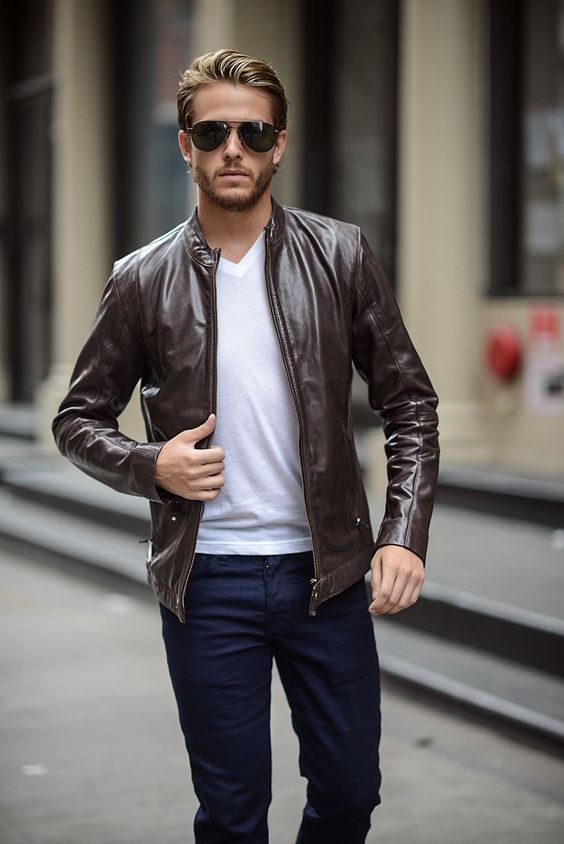
The leather jacket carries more cultural weight than anything else on this list. Marlon Brando wore it in 1953. The Ramones wore it in the ’70s. It has passed through decades without becoming a costume, which says something. A well-chosen leather jacket in a classic silhouette reads as sharp and intentional in a way few casual pieces manage.
The two silhouettes worth knowing.
The moto jacket (or biker jacket) has an asymmetric zip, lapels, and hardware details. It leans edgier and reads more casual. The cafe-racer or stand-collar jacket is cleaner, with a minimal collar and centered zip — easier to dress up and more versatile across occasions.
How to wear it: A black moto jacket over a plain white tee, slim dark jeans, and white or black leather sneakers is the most reliable formula. For a more elevated take, wear a cafe-racer jacket over a fine-knit navy crew-neck with tailored trousers and clean leather boots.
On budget: A good leather jacket is an investment. Genuine cowhide or lambskin in the $200 to $400 range holds its shape, develops a patina with wear, and lasts years. Quality synthetic leather (PU leather) has improved considerably and offers a reasonable alternative at a lower price point — just manage expectations on longevity. Avoid bonded leather, which cracks and peels within a season or two.

The Denim Jacket
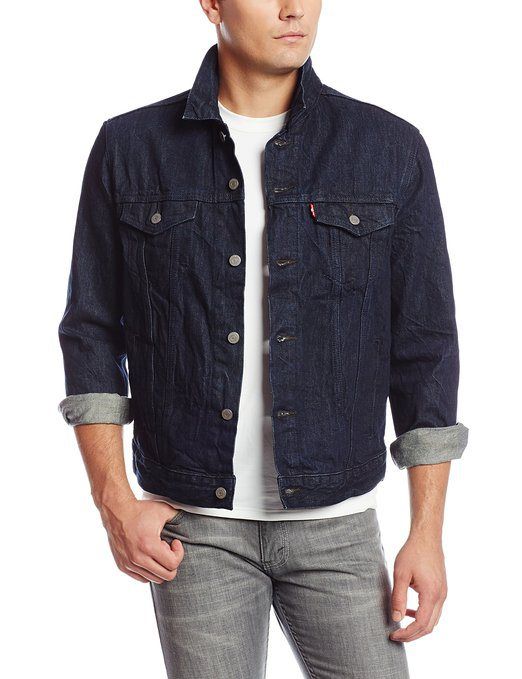
If the bomber is the most versatile casual jacket, the denim jacket is the most durable. It functions in all four seasons — light enough for summer evenings, useful as a mid-layer in fall and winter — and its casual credibility makes it one of the few pieces that genuinely works across age groups and style sensibilities.
How to wear it: Pair it over a plain white or grey crew-neck tee with dark jeans or chinos. For cooler weather, layer it under a heavier overcoat or above a thick hoodie. The classic double-denim formula — denim jacket with jeans in a different wash — works when the tones contrast enough; avoid matching the jacket and trouser wash exactly.
The style verdict: Buy it in indigo or washed-out mid-blue first. Black denim jackets are more niche; they read harder and pair with fewer things. Go classic before you go dark.
Denim with a sherpa or fleece lining is worth considering for winter use — it adds warmth without adding bulk, and the texture contrast gives the jacket a bit more visual interest.

The Sherpa Jacket
The sherpa jacket — known by a few names, including the trucker with sherpa lining or the shearling-style jacket — is a casual, high-warmth piece with strong visual texture. The fleece or faux shearling lining is usually visible at the collar and cuffs, and the shell is typically denim, canvas, or corduroy.
Despite what you may have read elsewhere, the sherpa jacket is distinctly casual outerwear. It is not formal. Its warmth-to-style ratio is excellent for fall weekends and milder winter days, but it does not belong in smart-casual or office contexts.
How to wear it: A classic denim-shell sherpa jacket in off-white or tan over a heavy crew-neck sweatshirt, dark denim, and work boots is the formula that works best. Keep the rest of the outfit simple — the sherpa’s texture does enough visual work on its own.
The style verdict: One is enough. The sherpa jacket does one job well — casual weekend warmth with a relaxed, slightly worn-in aesthetic. It is not a layering piece; it reads best as the outer layer in casual contexts.

The Anorak
The anorak sits at the technical-casual end of the outerwear spectrum. Essentially a pullover windbreaker cut to hip length — no full front zip, typically a half-zip or snap closure — it is built for wind and light rain protection rather than serious cold. Its design language borrows from outdoor and workwear, which is why it tends to read younger and more streetwear-adjacent.
When to reach for it: Windy days, transitional weather, active weekends. The anorak is the right call when you need wind and light rain protection but do not want the volume of a puffer jacket.
How to wear it: Anorak over a crew-neck sweatshirt, straight-leg joggers or cargo trousers, and clean running shoes or trail-style sneakers. The formula is deliberately casual — the anorak does not translate into smart-casual territory.
Colorway pick: Olive, navy, or stone are the most versatile. Avoid loud colors or heavy branding unless that aesthetic is intentional.


The Overshirt
The overshirt occupies the useful territory between a shirt and a jacket — too thick to be worn as a base layer, too casual to be considered outerwear, but genuinely valuable as a mid-layer or standalone piece in mild weather. Think of it as a structured CPO shirt or a light shirt jacket: it has the structure of a jacket but the relaxed energy of a casual shirt.
Why it earns a spot in the rotation: In climates with mild springs and falls, the overshirt fills the gap that a denim jacket sometimes overqualifies for. It works over a plain tee as a standalone, or under a heavier jacket when temperatures drop.
How to wear it: Olive or slate grey wool-blend overshirt over a white tee, dark straight-leg jeans, and white sneakers or suede boots is a clean casual formula. Flannel overshirts in earth tones or muted plaid work well for fall weekends.
Fabric matters: Wool-blend overshirts are the most polished and warm. Flannel is casual and seasonal. Cotton or canvas overshirts work year-round but offer minimal insulation.


The Puffer (Down Jacket)
Not in the original article, and a significant gap. The puffer or down jacket is arguably the most practical jacket on this list for anyone living in a genuinely cold climate. At its best, it provides serious insulation in a packable, relatively low-profile silhouette.
What to look for: Fill power is the key spec. A 550-fill puffer is adequate for a mild cold; a 650 to 750-fill puffer handles genuine winter temperatures. Goose down insulates better than duck down and does not retain odor in the same way. For those who prefer animal-free alternatives, high-quality synthetic insulation (PrimaLoft, Thermolite) has closed the performance gap considerably.
Fit matters more with puffers than most people realize. An oversized puffer adds significant visual bulk. A trim, fitted puffer in a shorter cut — hitting at the hip rather than mid-thigh — reads noticeably more put-together while offering the same warmth.
How to wear it: Navy or black slim-cut puffer over a roll-neck or chunky sweater, with dark jeans and Chelsea boots. Or use it as an insulating mid-layer under a long wool overcoat on genuinely cold days.
How to Build Your Jacket Wardrobe: A Prioritized Approach
Start with the jackets that work hardest before adding the ones that add character. Here is the order that makes sense for most guys:
Start here: Denim jacket and bomber. These two cover the majority of casual situations year-round.
Add next: A leather jacket or suede jacket, depending on which aesthetic suits you better. One is enough.
For function: Field jacket for utility, puffer for real cold.
For character: Sherpa jacket and overshirt fill in seasonal gaps and add texture to a wardrobe that already has the essentials
covered.
Six jackets. Each one doing a specific job. That is a wardrobe, not a collection.
Frequently Asked Questions
How many jackets should a man own?
Five to six covers every situation realistically: a denim jacket, a bomber, a leather or suede jacket, a field jacket, and a puffer for genuine cold. An overshirt or sherpa jacket can round out the rotation depending on your climate and lifestyle.
What is the most versatile jacket for men?
The denim jacket. It works across seasons, ages, and casual occasions, pairs with the widest range of outfits, and holds up for years with minimal care.
What jackets are worth spending money on?
The leather jacket and the puffer are the two pieces where investment makes the most meaningful difference. A quality leather jacket lasts a decade or more and develops character with wear. A high-fill-power down jacket performs noticeably better than budget alternatives in real cold.
Can you wear a bomber jacket in winter?
In mild winters, yes. In genuine cold, the bomber works best as a mid-layer under a heavier coat or parka rather than as the outer shell.
What is the difference between a field jacket and a utility jacket?
They refer to the same style. Both describe a multi-pocket, military-derived casual jacket in an olive or khaki shell. The terms are interchangeable.