
Building a shirt wardrobe from scratch can feel overwhelming. There are dozens of styles, fabrics, and fits to choose from, and most advice either tells you to buy everything at once or gives you a list so vague it could apply to anyone.
This guide cuts through that. Below are the 10 shirts worth owning, ranked roughly in the order a beginner should buy them, with specific outfit combinations for each one. Buy the first three and you will be dressed for 90% of your life. Add the rest as you need them.
Start Here: The First Three Shirts to Buy


If you are starting from zero, do not buy 10 shirts at once. Start with these three. They cover casual weekends, smart casual events, and formal occasions. Once you have them, everything else is a bonus.
1. The Oxford Cloth Button-Down (OCBD)


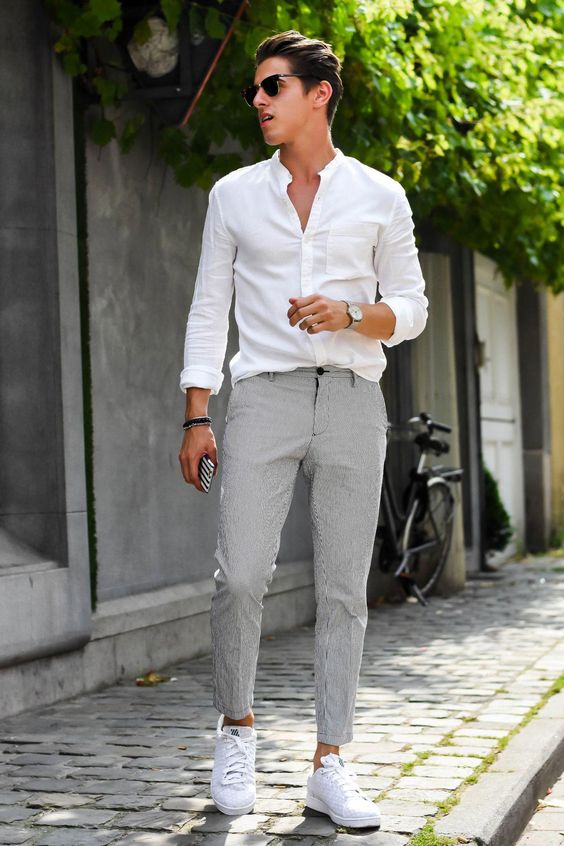
The Oxford shirt is the single most useful shirt in menswear. It is casual enough for jeans on a Saturday and refined enough for a blazer on a Monday. If you only own one shirt, make it this one.
The Oxford cloth weave is thicker and more textured than most shirt fabrics, which gives it a relaxed, lived-in quality that suits a wide range of situations. White and sky blue are the two colors to start with. Both will pair with nearly everything in your wardrobe.
How to wear it: A white OCBD tucked into slim navy chinos with white leather sneakers is a clean, versatile look for most casual occasions. For a smarter edge, layer it under a navy or camel blazer with the collar left open. Avoid pairing it with a tailored suit as the casual fabric clashes with formal tailoring.
Worth knowing: The button-down collar is a design detail borrowed from polo players in the late 1800s, who buttoned their collars down to stop them flapping during matches. John Brooks of Brooks Brothers introduced it as a shirt style in 1896 and it has barely changed since.
2. The Dress Shirt


Every man will eventually need a dress shirt. Job interviews, weddings, formal dinners, black-tie events: the dress shirt is the correct answer for all of them.
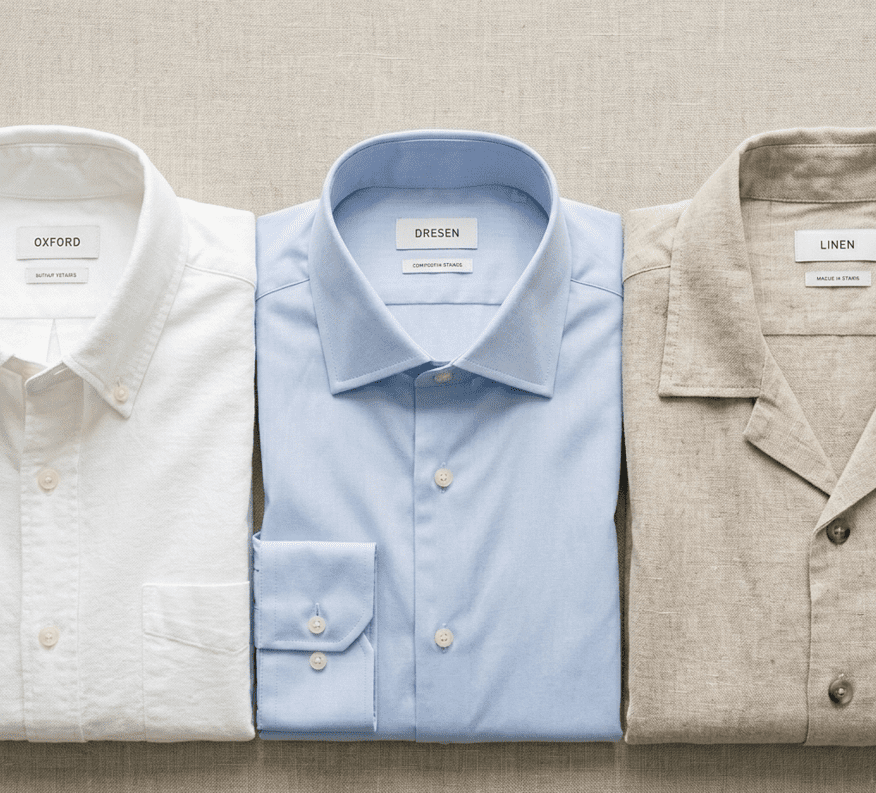
A classic dress shirt is made from poplin or twill fabric with a spread or cutaway collar, double cuffs, and a clean placket front. White is the only color you need to start. A light blue follows.
How to wear it: A white poplin dress shirt with a spread collar pairs best with a charcoal or navy two-piece suit, a tie in a medium knot, and black Oxford shoes. For black tie, pair it with a tuxedo, a black bow tie, and silver or black cufflinks. Avoid wearing a dress shirt untucked as the longer hem makes it look unfinished.
Fabric note: Poplin (also called broadcloth) is the most common dress shirt fabric. It has a smooth, crisp feel and a slight sheen. Twill is heavier and slightly textured with a diagonal weave, making it a better choice for winter months.
3. The Linen Shirt


Linen is the best warm-weather fabric in menswear, full stop. It is lighter than cotton, more breathable than chambray, and looks better the more relaxed it gets. A pale blue or white linen shirt in a regular or relaxed fit will get consistent wear from spring through to early autumn.
How to wear it: Roll the sleeves to just below the elbow and wear it with off-white tailored shorts and tan leather sandals for a clean summer look. For a smarter option, keep the sleeves down and pair with stone chinos and loafers. Linen wrinkles easily, but on a linen shirt that is a feature, not a flaw.
Worth knowing: Linen is made from the flax plant, which requires significantly less water and fewer pesticides to grow than cotton. If sustainability matters to you, linen is one of the better choices in your wardrobe.
Now Build It Out: The Next Seven Shirts
Once you have the OCBD, dress shirt, and linen shirt, you are in a strong position. The shirts below extend your range into different seasons, occasions, and aesthetics.
4. The Flannel Shirt


Flannel is the cold-weather answer to linen. It is soft, substantial, and one of the most effortlessly stylish casual shirts you can wear between October and March. The classic option is a checked pattern in red and black, navy and grey, or green and brown.
How to wear it: Leave it unbuttoned over a white or grey crew-neck sweatshirt with dark raw denim jeans and lace-up boots for a well-put-together casual look. On colder days, layer a shearling or wool coat on top. Polo Ralph Lauren and Pendleton are worth looking at for quality flannel at different price points.
5. The Denim Shirt


A denim shirt is tougher and more textured than most other shirts, which makes it a useful layering piece as well as a standalone top. It pairs well with chinos, cargo trousers, and smarter trousers in a way that adds casual contrast.
How to wear it: Wear a light-wash denim shirt open over a plain white tee with dark indigo jeans for a double-denim look that works when the shades are clearly different. For a cleaner option, button it fully and wear it tucked into slim-fit dark chinos with suede Chelsea boots. Avoid pairing mid-wash denim with mid-wash jeans as the tones are too close to read as intentional.
Quality note: Low-quality denim pills and fades unevenly within a season. It is worth spending a little more here. Look for shirts with a weight of at least 6oz denim from brands like Edwin, A.P.C., or Levi’s Made in Japan.
6. The Cotton-Poplin Shirt
If the Oxford shirt is the casual end of the smart-casual spectrum, the cotton-poplin shirt is the refined end. It has a crisp, smooth surface with a faint horizontal rib and a slight sheen that reads as more polished than Oxford cloth without crossing into full dress shirt territory.
How to wear it: A pale pink poplin shirt with a spread collar worn tucked into mid-grey wool trousers and paired with a charcoal blazer is a versatile office look that does not require a tie. Light blue and white are also strong choices. Note that finer poplin can shimmer on video calls due to the Moiré effect, worth keeping in mind if you spend time on camera.
7. The Chambray Shirt


Chambray is frequently confused with denim. Both have a blue-toned, textured appearance, but chambray uses a plain weave and a much lighter fabric weight, which makes it more appropriate for warmer months and smarter settings than denim.
How to wear it: A chambray shirt pairs well with stone chinos or light tan trousers for a relaxed smart-casual look. It can also be worn under a lightweight unstructured blazer to dress down a more formal outfit. The main rule: avoid wearing chambray with similarly toned denim as the similar color without the contrast looks unintentional.
8. The Overshirt

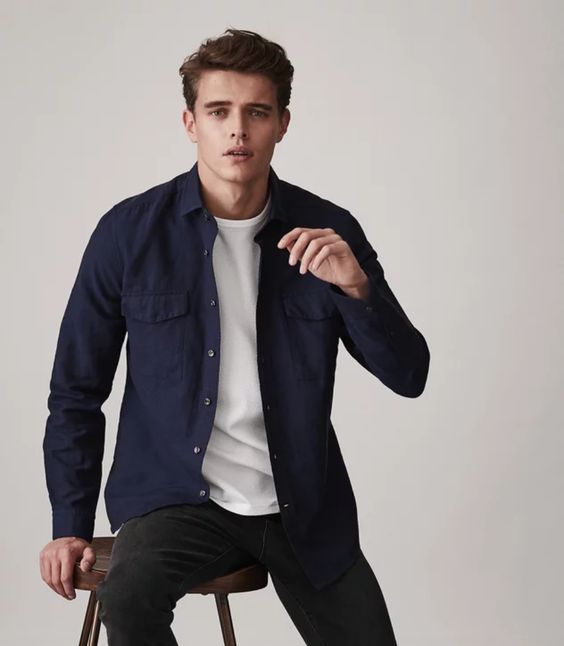

The overshirt sits somewhere between a shirt and a light jacket. It is worn open over a base layer and functions as a layer on days when the weather is too mild for a coat but too cool for just a T-shirt. Heavier fabrics like twill, canvas, or brushed cotton work best.
How to wear it: A dark navy overshirt worn open over a white crew-neck tee with straight-leg dark denim jeans and white low-top trainers is a simple, reliable combination. Neutral colors such as olive, navy, and stone offer the most flexibility across different outfits.
9. The Cuban Collar Shirt

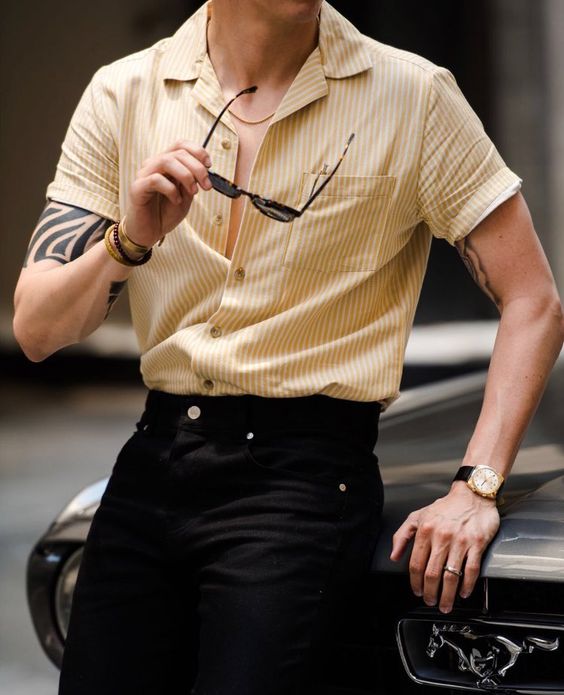

The Cuban collar shirt (also called a camp collar shirt) is a short-sleeved style with an open, notched collar that sits flat against the chest. It is a warm-weather shirt designed for relaxed settings: beach days, outdoor festivals, weekend lunches.
How to wear it: Wear it untucked with tailored shorts in a contrasting color and clean white trainers for a summer look that is casual without being lazy. A white or pale solid Cuban collar shirt is more versatile than a print to start. Fit is critical here: the body should skim without pulling, and the sleeves should end at mid-bicep. Too baggy and it reads as sleepwear.
10. The Short-Sleeve Shirt
The short-sleeve shirt earns its place in summer as a casual, easy piece that covers more than a T-shirt without requiring the formality of a full collared shirt. Tropical prints, vertical stripes, and solid pastels all work well depending on the occasion.
How to wear it: A white vertical-striped short-sleeve shirt worn untucked with light chino shorts and canvas shoes is a clean and straightforward summer combination. Keep it casual: short-sleeve shirts do not belong with suits or tailoring regardless of how hot it is.
How a Shirt Should Fit: A Simple Checklist
Even the best shirt looks wrong in the wrong size. Before you buy, check these five things.
- Collar: One finger should fit comfortably between your neck and the fastened collar. Gaping means it is too large. Straining means it is too small.
- Shoulders: The shoulder seam should sit exactly at the edge of your shoulder, not dropping down your arm and not sitting inward on your upper arm.
- Chest: There should be enough room to pinch an inch of fabric on either side of the chest. If you cannot do this, the shirt is too tight.
- Sleeves: On a long-sleeved shirt, the cuff should end exactly at the base of your wrist. It should not ride up when you raise your arms.
- Length: Casual shirts should reach roughly halfway down your seat when untucked. Dress shirts should reach to the bottom of your seat to prevent them from pulling out when you sit.
The Order to Build Your Shirt Wardrobe


In our experience helping readers build a wardrobe from scratch, the biggest mistake is buying shirts without a sequence. Here is the order that makes the most sense for someone starting out.
- Oxford cloth button-down in white or sky blue (covers 90% of casual and smart-casual occasions)
- White poplin dress shirt (covers every formal occasion you will encounter)
- Linen shirt in pale blue or white (your summer essential)
- Flannel shirt (your cold-weather casual option)
- Denim or chambray shirt (adds texture and layering options)
- Cotton-poplin shirt (your smart-casual upgrade)
- Remaining styles as needed based on your lifestyle and occasions
Frequently Asked Questions
How many shirts should a man own?
Most men need between 7 and 14 shirts for a well-rounded wardrobe. A reasonable starting point is 3 to 5 casual shirts, 2 to 3 smart-casual shirts, and 2 dress shirts. If you work in an office five days a week, aim for at least 5 shirts in rotation so each one gets adequate rest between wears, which extends the fabric life. If your life is more casual, 7 shirts across different styles and weights will cover most situations comfortably.
What is the most versatile shirt a man can own?
The Oxford cloth button-down (OCBD) is the most versatile shirt in menswear. It bridges casual and smart-casual effortlessly, works with jeans, chinos, trousers, and under blazers, and looks as natural untucked on a weekend as it does tucked under a sport coat at work. White and sky blue are the two most useful colors. Most menswear experts recommend starting with a white OCBD before adding anything else to a shirt wardrobe.
What shirts are appropriate for a job interview?
For most job interviews, a white or pale blue dress shirt or a white Oxford cloth button-down is the right choice. If the role is corporate or financial, a white poplin dress shirt with a spread collar worn with a navy or charcoal suit is the safest option. For creative or business-casual environments, a well-fitted OCBD in white or blue worn with tailored trousers works well without requiring a tie. Avoid loud prints, bold colors, or casual shirts such as linen or Cuban collar styles.
What is the difference between Oxford and poplin fabric?
Oxford cloth has a basket-weave texture that gives it a slightly rough, casual surface. It is thicker, more durable, and more relaxed-looking than poplin. Poplin (also called broadcloth) has a plain weave with a smooth, crisp surface and a faint sheen. Poplin is more formal and reads as more polished. Oxford cloth is ideal for smart-casual settings. Poplin is better suited to office wear and formal occasions. Both are made from cotton, but the weave structure creates a significantly different look and feel.
Can you wear a linen shirt in winter?
Linen shirts are best suited to spring and summer because the open weave breathes well in warm conditions but provides little insulation in cold weather. In mild autumn weather, a linen shirt can work layered under a lightweight jacket or overshirt. In proper winter temperatures, linen is not a practical choice. Flannel, Oxford cloth, and heavier cotton twill are better alternatives for colder months. If you enjoy the relaxed look of linen, brushed cotton shirts offer a similar casual aesthetic with more warmth.
What is a Cuban collar shirt and when should you wear it?
A Cuban collar shirt (also called a camp collar shirt) is a short-sleeved, collared shirt where the collar sits flat against the chest rather than folding up and over. It originated in Cuba and became associated with a relaxed, warm-weather aesthetic. It is best worn at casual outdoor events, beach settings, holidays, and summer social occasions. It is not appropriate for formal or professional settings. Fit is especially important with this style: the body should skim the torso without billowing, and sleeves should not extend past mid-bicep.
How should you care for dress shirts to make them last longer?
Wash dress shirts on a cool or warm cycle (30 to 40 degrees) rather than hot, which weakens fibers and fades color. Hang them to dry on a wide hanger rather than tumble drying, which shrinks fabric and damages collar structure. Iron while slightly damp for the best result. Store dress shirts hung rather than folded to avoid set creases. Rotating between at least 5 shirts in a weekly work wardrobe means each shirt is worn roughly once a week, which significantly extends fabric life compared to daily wear.
What is the difference between a denim shirt and a chambray shirt?
Denim and chambray look similar but behave quite differently. Denim is a twill-weave fabric with a heavier weight, usually 8 to 14 ounces, which makes it durable and structured. Chambray is a plain-weave fabric that is significantly lighter, usually 3 to 5 ounces, which makes it softer, more breathable, and more appropriate for warmer weather and smarter settings. Think of chambray as the dressed-up, warm-weather version of denim. Both are typically blue, but chambray suits occasions where denim would feel too casual or too heavy.